- Baked In
- Posts
- 🏞️ Your Move, Virginia Governor Spanberger
🏞️ Your Move, Virginia Governor Spanberger

Anthony Varrell
April 23, 2026
GM Everyone,
The “slow walking” turned into “this week” rather quickly, eh?

Own Your Edge. Use promo code “TDR20” for $20 off your first order at FrePouch.com
💸 The Tape
Virginia's path to legal cannabis sales just took its most dramatic turn yet — and the outcome now rests entirely in the hands of a governor whose own party just told her no.
On Wednesday, lawmakers in the reconvened session voted to reject Governor Abigail Spanberger's proposed amendments to the state's recreational marijuana sales legislation. The House of Delegates declined to consider the changes by voice vote, and the Senate followed with a 21-18 vote against. The original bills — SB 542 from Sen. Lashrecse Aird (D) and HB 642 from Del. Paul Krizek (D) — now head back to Spanberger's desk in their unaltered form, giving her 30 days to sign them, veto them, or allow them to become law without her signature.
The stakes couldn't be higher. If Spanberger vetoes, Virginia's cannabis commerce framework dies, and lawmakers would have to start over with new legislation in the 2027 session. If she signs or steps aside, the state launches legal sales on January 1, 2027.
What the Governor Wanted — And Why Lawmakers Said No
Spanberger's proposed amendments weren't minor tweaks. They represented a fundamental reorientation of the legislation's philosophy — and that's exactly what prompted the backlash.
The governor sought to delay the sales launch from January 1, 2027 to July 1, 2027, increase the excise tax from 6% to 8% starting in 2029, reduce the possession limit from the legislature's proposed 2.5 ounces to 2 ounces, and — most controversially — introduce a slate of new criminal penalties that reform advocates said would undo years of decriminalization progress.
Under Spanberger's proposal, public marijuana use would become a Class 4 criminal misdemeanor rather than the current civil violation carrying a $25 fine. Possession by anyone under 21 would be elevated to a Class 1 misdemeanor with a mandatory minimum $500 fine or 50 hours of community service, plus suspension of driving privileges for at least six months. And illegal sale or distribution of 50 pounds or more would be classified as a Class 2 felony punishable by life in prison.
The governor also proposed eliminating the Cannabis Equity Reinvestment Fund entirely and redirecting all revenue into the general fund with broad earmarks. She wanted to remove language directing a legislative commission to study on-site consumption licenses and microbusiness event permits. And she sought to funnel the equity and reinvestment provisions through a vague regulatory process rather than the specific framework lawmakers had carefully constructed.

The Sponsors Push Back
Both bill sponsors made clear before the vote that they wanted their colleagues to reject the amendments — even at the risk of a veto.
Sen. Aird said the governor's substitute "moves Virginia in the wrong direction and disregards years of data-driven, bipartisan work." She urged Spanberger to reconsider provisions that "reintroduce punitive measures undermining the intent of legalization" and "remove essential supports for impact licensees."
Del. Krizek was more pointed, noting that the legislature had taken bipartisan steps years earlier to end racially discriminatory marijuana policing in Virginia. The governor's amendments, he said — "probably not intentionally, as she has not been involved in this years-long process" — would "repeal a number of those decriminalization laws" and undermine a "thorough, thoughtful, balanced process" built on community and stakeholder engagement.
"When we legalized cannabis it was with a recognition of the disproportionate harm caused by the war on cannabis, particularly among Black families," Krizek said. "This bill was intentional in recognizing that, but much of that intentionality is lost with these many amendments."
JM Pedini of Virginia NORML was blunter: the governor's substitute "would have reversed years of progress" and resulted in "a return to racially discriminatory marijuana policing across the commonwealth."
The Resentencing Fight
The cannabis sales bill wasn't the only measure where lawmakers pushed back. The legislature also rejected Spanberger's amendments to separate legislation — HB 26 from Del. Rozia Henson Jr. (D) and companion bill SB 62 from Senate President Pro Tem Louise Lucas (D) — that would provide resentencing relief for people incarcerated or on supervision for certain marijuana felonies.
As passed by lawmakers, the bills create an automatic hearing process for affected individuals. Spanberger's amendment would have required those individuals to proactively file petitions instead — a procedural barrier that advocates argued would effectively deny relief to the people least equipped to navigate the legal system.
Lawmakers sent the original resentencing bills back to the governor alongside the sales legislation.
What Did Pass
Not everything was contentious. Lawmakers approved Spanberger's minor amendments to HB 391, which clarifies regulations for marijuana delivery services and cannabis product labeling, and to SB 543, concerning enforcement against illegal cannabis product sales. The governor also signed several other reform bills this month, including measures protecting parental rights of cannabis consumers and allowing medical marijuana access in hospitals.
The 30-Day Clock
The calculus now shifts entirely to Spanberger. She has three options: sign the original legislation, veto it, or let it become law without her signature.
A veto would be politically risky. Her own party's legislators overwhelmingly supported the original framework, and vetoing cannabis reform after five years of legislative effort — during which former Governor Youngkin already vetoed sales bills twice — would invite comparisons she presumably doesn't want. It would also leave Virginia's gray market operating unchecked for at least another year, undermining the very public safety concerns Spanberger cited as justification for her amendments.
Signing the bill as-is would require walking back her own proposals — an uncomfortable but increasingly common political maneuver when the alternative is worse.
The middle path — allowing the bill to become law without her signature — lets Spanberger signal disagreement without killing the legislation. It's the political equivalent of a disapproving nod, and it may be the most likely outcome.
Whatever she decides, the clock is ticking. Virginia has waited five years for a legal marketplace. The answer arrives within 30 days.

📈 Dog Walkers
$AAWH ( ▲ 4.57% ) Opens First Of Many
The cannabis industry talks a lot about social equity. East Coasting is what it looks like when the talk becomes a storefront.
Ascend Wellness Holdings announced the opening of East Coasting, a new adult-use dispensary at 178 NJ-35 in Eatontown, New Jersey, operated independently by Kyle Page with operational support from Ascend through a partnership agreement designed to expand ownership opportunities for diversely-owned businesses under New Jersey law.
Page's path to dispensary ownership is the kind of story the industry needs more of. His journey was shaped by the unequal enforcement of cannabis laws in Black communities and the long-term barriers created by a cannabis-related conviction. After entering the legal industry in 2022, Page was hired through Ascend's program for returning citizens, working his way from cultivation associate to supervisor before pursuing retail and operational training to prepare for ownership.
Along the way, he became an advocate at expungement clinics and community events, supporting others navigating similar barriers. Despite regulatory challenges tied to his past conviction, Page persisted — and now holds the keys to his own operation.
"This is about building a dispensary that people are proud to visit," Page said, describing East Coasting as a space rooted in community, opportunity, and progress — "a brand that stands for inclusion, advocacy, and hope for what this industry can become."
Danielle Drummond, Ascend's VP of Social Equity, called Page's story a reflection of "both the harm caused by prohibition and the promise of a more equitable cannabis industry."
The dispensary soft-opened with a grand opening celebration planned for April 24, featuring giveaways, promotions, and in-store activations. East Coasting operates daily from 9 AM to 9 PM.
From conviction to ownership. That's equity in action, not just on paper.
$IXHL ( ▼ 0.53% ) Furthers Psychedelic Arm
A White House Executive Order on psychedelic therapies just gave companies like Incannex Healthcare a significant tailwind.
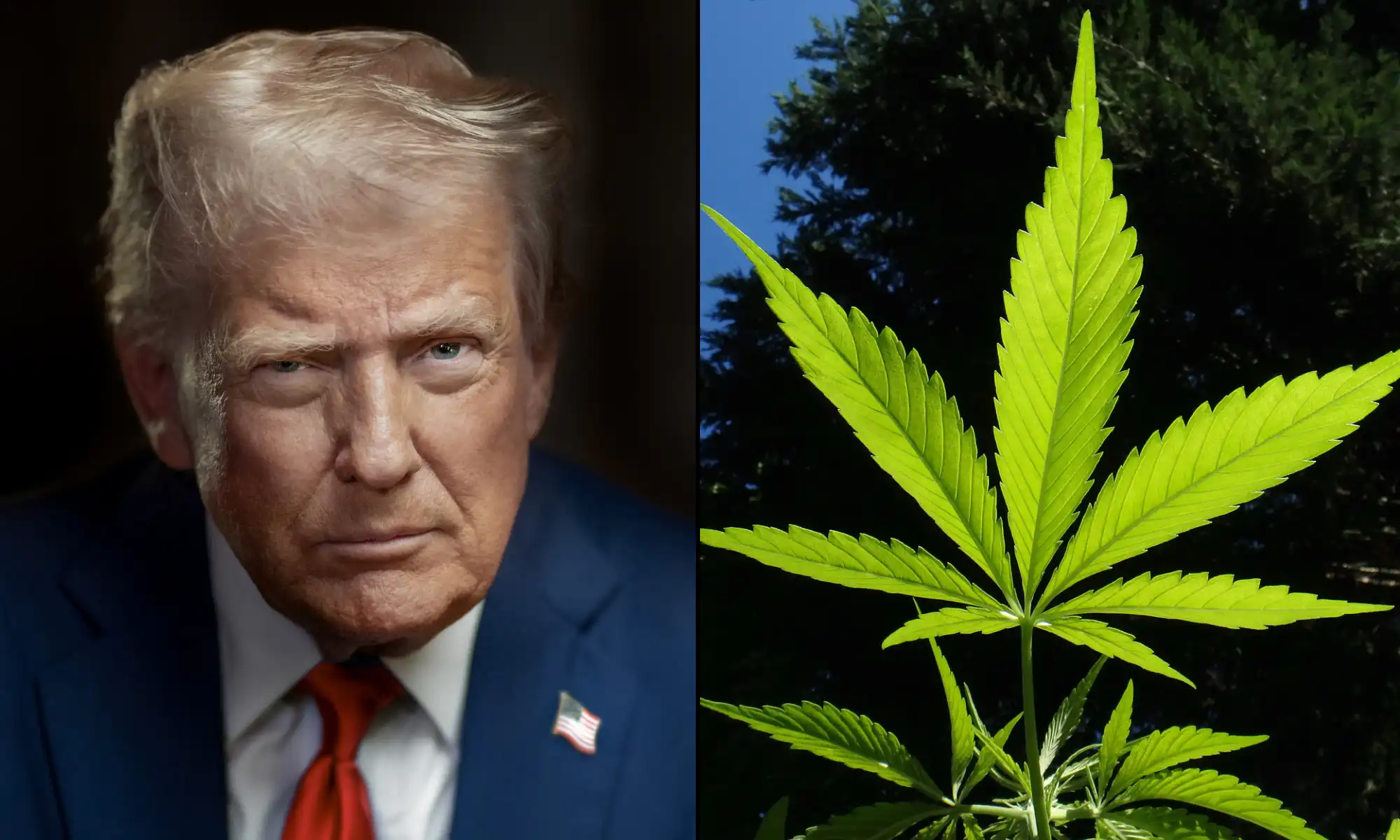
President Trump signed an order on April 18 titled "Accelerating Medical Treatments for Serious Mental Illness," directing the FDA to prioritize review of psychedelic compounds with Breakthrough Therapy designations, create Right to Try pathways for investigational psychedelics, and initiate DEA rescheduling upon successful Phase 3 completion. For the psychedelic therapeutics sector, it's the most concrete federal support the space has seen.
Incannex is positioning its lead candidate, PSX-001 — an oral, fixed-dose synthetic psilocybin formulation for Generalized Anxiety Disorder (GAD) — as a direct beneficiary. The company's completed Phase 2 trial produced striking results: a 12.8-point reduction in HAM-A anxiety scores versus 3.6 for placebo, a 44% clinically meaningful response rate (four times placebo), and a 27% remission rate sustained through 11 weeks — five times the placebo rate. Notably, there were no serious adverse events across 73 patients.
CEO Joel Latham called the Executive Order "a meaningful step toward ensuring that novel, evidence-based therapies can reach patients without unnecessary delay," noting that Incannex holds an active U.S. IND, has over $70 million in cash with no debt, and considers its Phase 2 data "among the strongest in the oral psilocybin space."
GAD affects an estimated 280 million people globally and 6.8 million in the U.S., with limited options for patients who fail first-line treatments. For Incannex, the regulatory winds just shifted meaningfully in its favor.
🗞️ The News
📺 YouTube
Washington Post Reports Cannabis Rescheduling Could Be Finalized | TTB Presented by Flowhub
What we will cover:
✅ In the latest Trade To Black livestream presented by Flowhub, Shadd Dales and Anthony Varrell break down late-breaking news just reported by the Washington Post — and the question everyone’s asking right now:
Is this finally it for cannabis rescheduling?
In segment one, investor Marc Cohodes joins the show to react to the Washington Post report suggesting rescheduling could be nearing the finish line. We get into what this actually means, how seriously to take it, and whether this is real progress.
Then in segment two, the focus shifts to something just as important—how to be prepared if this does move forward.
Shadd tees up what happened back on December 18 when Donald Trump signed the executive order—how the sector got aggressively shorted, and how a lot of retail investors holding short-dated options got caught on the wrong side of that move.
Noah Hamman, CEO from AdvisorShares Pure Cannabis ETF (NYSE:ARCA) join us to break down the price action, and what traders should be thinking about this time around.
Then in segment three, Kyle Sherman joins to give his take on the Axios report, plus early 4/20 data. We get into what the numbers are showing so far and what operators should be paying attention to coming out of one of the biggest days of the year.
Three segments. One question:
Are we actually close this time?