- Baked In
- Posts
- 👀 SAM Loses A Major Ally
👀 SAM Loses A Major Ally

Anthony Varrell
June 02, 2026
GM Everyone,
GG.

Own Your Edge. Use promo code “TDR20” for $20 off your first order at FrePouch.com
💸 The Tape
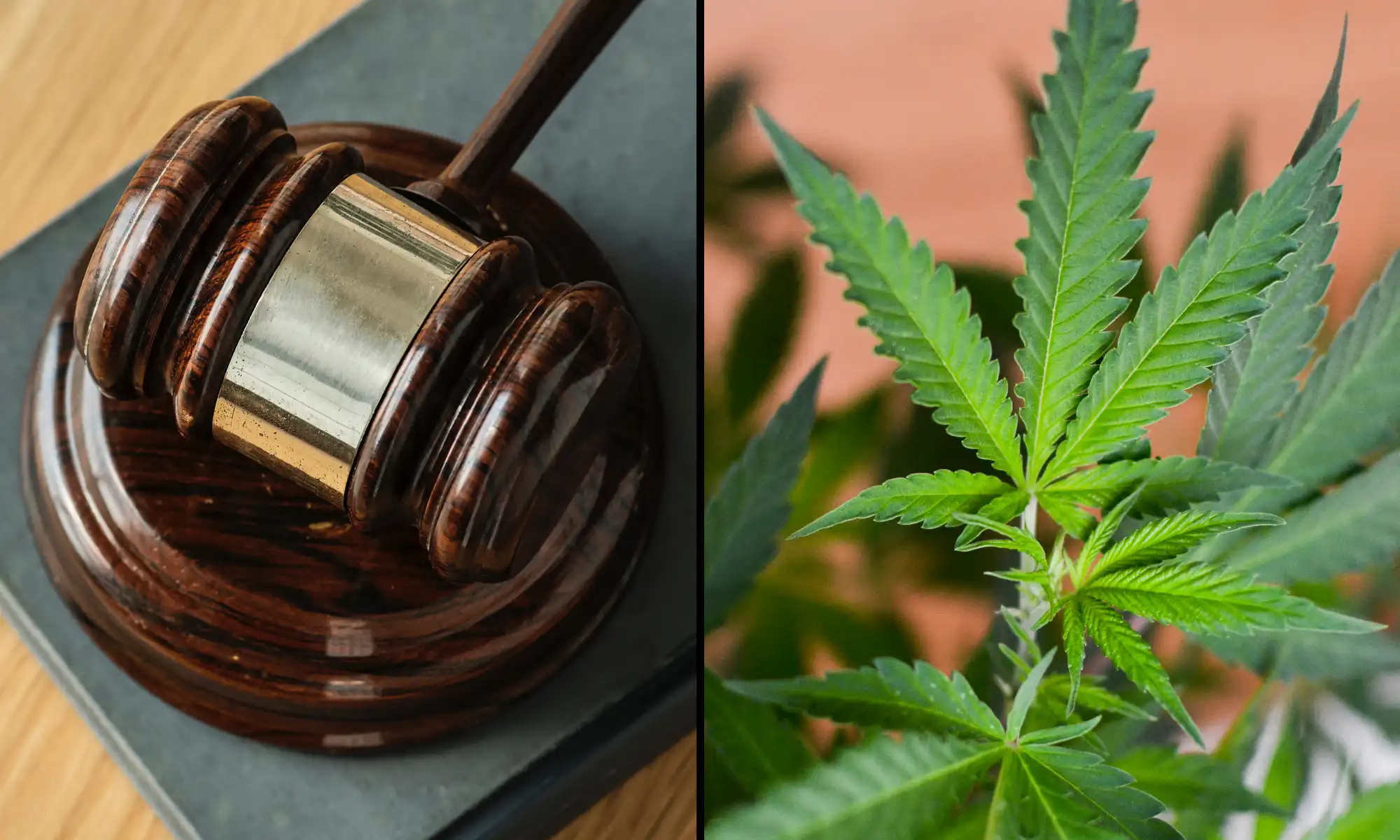
The legal resistance to the Trump administration's marijuana rescheduling is multiplying, but one of its early participants has just walked away. Louisiana Attorney General Liz Murrill (R) has withdrawn from the multi-state lawsuit she helped launch only days earlier — an abrupt reversal that's worth examining alongside an underappreciated fact: the state she represents runs one of the quieter success stories in American medical cannabis.
The case she joined, then left
The suit was filed last month in the U.S. Court of Appeals for the D.C. Circuit by Murrill alongside the attorneys general of Indiana and Nebraska. The petition takes direct aim at the DOJ's April rescheduling action, arguing the move "fails to comport with the requirements" of federal law, was "improperly promulgated and was otherwise procedurally improper," and is ultimately "arbitrary, capricious, an abuse of discretion, and not in accordance with law." The petitioners asked the court to vacate the action outright.
Then, on Friday, Murrill reversed course. Invoking Federal Rule of Appellate Procedure 42(b), she moved to dismiss Louisiana as a petitioner — a narrow, uncontested filing noting that respondents did not oppose and that each party would bear its own costs. No reason was given, and the attorney general's office did not respond to a request for comment.
The case carries on without her. Last week the court consolidated the states' complaint with a separate suit from prohibitionist group Smart Approaches to Marijuana (SAM) and the National Drug and Alcohol Screening Association (NDASA) — represented by Torridon Law, the firm where former Attorney General William Barr is a partner. A third challenge, from anti-marijuana activists, physicians, and a cannabis-focused biopharmaceutical company, landed the same week. Named defendants across the consolidated suits include the DOJ, the DEA, Acting AG Todd Blanche, and DEA Administrator Terrance Cole.
Why Louisiana's exit is more interesting than it looks
Here's the irony worth sitting with. Of the three states that signed on, Louisiana has arguably the most to gain from rescheduling — because unlike a symbolic objector, Louisiana has a real, functioning, taxpaying medical cannabis industry that stands to benefit directly from the 280E tax relief that Schedule III unlocks. Whether that calculus drove the withdrawal is unconfirmed, but the timing invites the question.
And the program itself deserves a closer look, because it has quietly defied its own skeptics. Louisiana legalized medical cannabis in 2015, but sales didn't begin until August 2019 — and the early years were genuinely lackluster. The structure was about as restrictive as any in the country: just two licensed cultivators (Good Day Farm and Ilera Holistic Healthcare, tied to LSU and Southern University respectively), a tiny qualifying-condition list, and dispensaries that had to operate as pharmacies with licensed pharmacists on staff — a model unique to Louisiana. When sales began, only about 3,000 patients were making purchases.

That sleepy program has since transformed. Nearly 150,000 Louisiana residents are now enrolled in the medical program, with the patient count more than doubling in under two years. That represents roughly 3.2% of the state's population — a meaningful penetration rate for a medical-only market with no recreational sales.
The retail footprint has expanded in step. The cap was lifted from the original handful of pharmacies, and the state now hosts 27 dispensaries against a statutory maximum of 30, spread across nine regions. Coverage is reasonable statewide, though access concentrates in New Orleans, Baton Rouge, and Shreveport, leaving rural patients with longer drives and thinner selection. Regulatory maturation continued in 2025, when oversight of retailers shifted from the Board of Pharmacy to the Louisiana Department of Health.
Has it been a success?
By its own modest design, yes — with caveats. The growth in patients and sales is real, and supply-side competition has even started pushing prices down as the consumer base widens. But it's worth being clear-eyed: the earlier industry projections were wildly optimistic. Forecasts a few years back floated $330–$400 million by 2025; the actual ~$91 million in wholesale sales, while strong growth, undershot those headline numbers considerably. The duopoly cultivation structure keeps the market concentrated and prices elevated relative to mature adult-use states, and the pharmacy-tethered model — cautious by design — has capped how fast the thing could scale.
So the honest read is a program that's been a qualified success: it grew the right way, kept safety and compliance tight, and is now positioned to capture a tax windfall from the very rescheduling its attorney general briefly tried to block. Whether Murrill's quiet exit reflects that conflict or something else entirely, the underlying fact remains — Louisiana built a medical market with genuine skin in this game, which makes its name on that petition the odd part, not its removal.

📈 Dog Walkers
$VRNO ( ▲ 7.23% ) Preps For Up-Listing
Verano Holdings (Cboe CA: VRNO) is doing some housekeeping. The Chicago-based multi-state operator announced today that its board has approved a 1-for-5 reverse stock split, expected to take effect on or about June 11, 2026 — a move squarely aimed at making the company presentable for a future listing on a major U.S. exchange.
The math is straightforward: Verano's roughly 364.4 million outstanding shares will compress to about 72.9 million, with a proportionally higher price per share. The company is betting the cleaner capital structure will widen the door to institutional investors, many of whom carry mandates that quietly screen out anything trading in penny-stock territory. Fractional shares won't survive the consolidation — holders get a cash payment in lieu, pegged to the Cboe Canada closing price the day before the split takes effect.
Founder and CEO George Archos framed the timing as deliberate, pointing to the historic medical cannabis rescheduling and the prospect of further reform on the horizon. The reverse split, he said, is a "prudent strategic measure" to ready the company for an uplisting — a step Verano clearly views as a when, not an if.
This isn't an isolated maneuver. It builds on Verano's November 2025 redomiciling from British Columbia to Nevada, the kind of structural groundwork that signals a company laying track toward U.S. capital markets well before the train arrives. The operational footprint backing all this remains substantial: 162 dispensaries, 14 cultivation and processing facilities, and more than 1.1 million square feet of grow capacity across 13 states.
The stock will continue trading under the VRNO ticker on both Cboe Canada and OTCQX, with Odyssey Trust Company handling the exchange. For investors, the practical takeaway is less about the share count and more about where Verano clearly intends to be listed next.perators and consumers caught in the middle, there's nowhere left to go.
$VREOF ( ▼ 1.0% ) Consolidates 30-1
Vireo Growth (CSE: VREO; OTCQX: VREOF) is taking a heavier hand to its share count than most of its peers. The Company announced a 30-for-1 consolidation across its Subordinate, Multiple, and Super Voting Shares, effective at market open on the June 5, 2026 record date.
The authority traces to a May 29 shareholder vote, where investors approved a range of not less than 20-for-1 and not more than 40-for-1, leaving the final ratio to the Board. On June 1, directors landed on 30-for-1. The effect is dramatic: Subordinate Voting Shares collapse from roughly 1.46 billion to about 48.5 million, while Multiple Voting Shares drop from 232,490 to roughly 7,749. No Super Voting Shares are currently outstanding. Crucially, proportional ownership and voting power stay intact — this is arithmetic, not dilution.
One detail worth flagging for shareholders: no fractional shares and no cash in lieu. Fractions are simply rounded down to the nearest whole share, meaning small odd-lot holders absorb the loss. Outstanding convertible securities will be proportionately adjusted.
Post-consolidation, the shares keep trading under VREO (CSE) and VREOF (OTCQX), but under a new ISIN and CUSIP — a housekeeping change holders should note for their records.
🗞️ The News
📺 Trade To Black
Verano Joins Curaleaf As Uplisting Momentum Builds | TTB Presented by Flowhub
The reverse-split wave widens: Hosts Shadd Dales and Anthony Varrell unpack Verano's (Cboe CA: VRNO) 1-for-5 reverse split, landing just days after Curaleaf's (TSX: CURA) own announcement — both explicitly tied to U.S. exchange uplisting ambitions.
Vireo goes bigger: Vireo Growth (CSE: VREO) piles on with a dramatic 30-for-1 consolidation, reinforcing the broader narrative of cannabis operators cleaning up bloated capital structures to court U.S. capital markets.
Pennsylvania in focus: ATACH President Michael Bronstein joins to break down Senator Sharif Street's comments on legalization and Schedule III, and what federal reform could mean for Pennsylvania's path forward.
The rescheduling lawsuit gets scrutiny: Bronstein also weighs in on the Indiana, Nebraska, and Louisiana AGs' challenge to the Trump administration's rescheduling order — and whether the case has any realistic shot at succeeding.